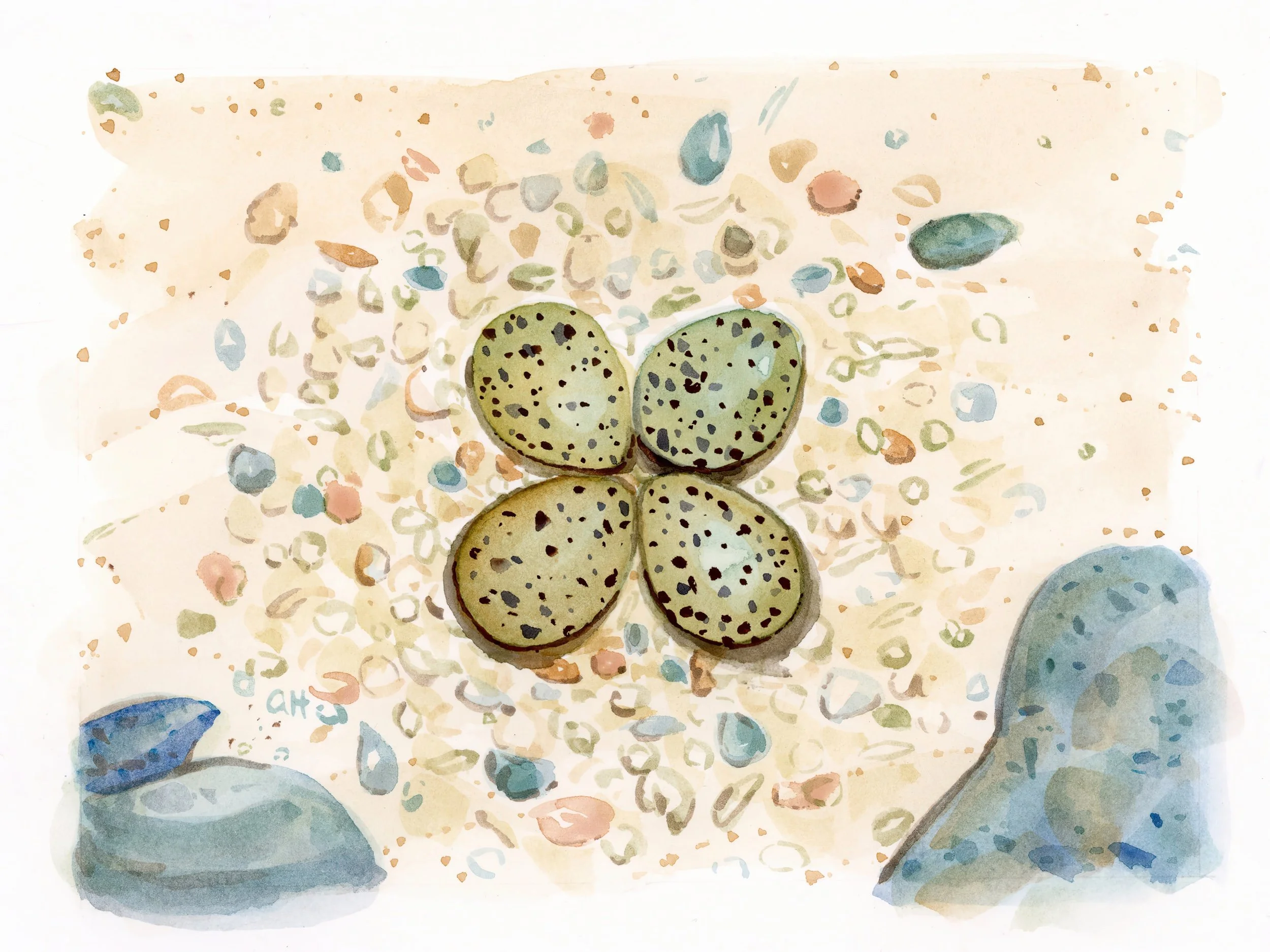
At the Dunes
These last few years, I’ve had a chance to visit several dunes across the United States. I’ve been amazed by their uniqueness, how much life they support, and how much more there is to learn. This series is ongoing.
2026, acrylic or watercolor, various sizes
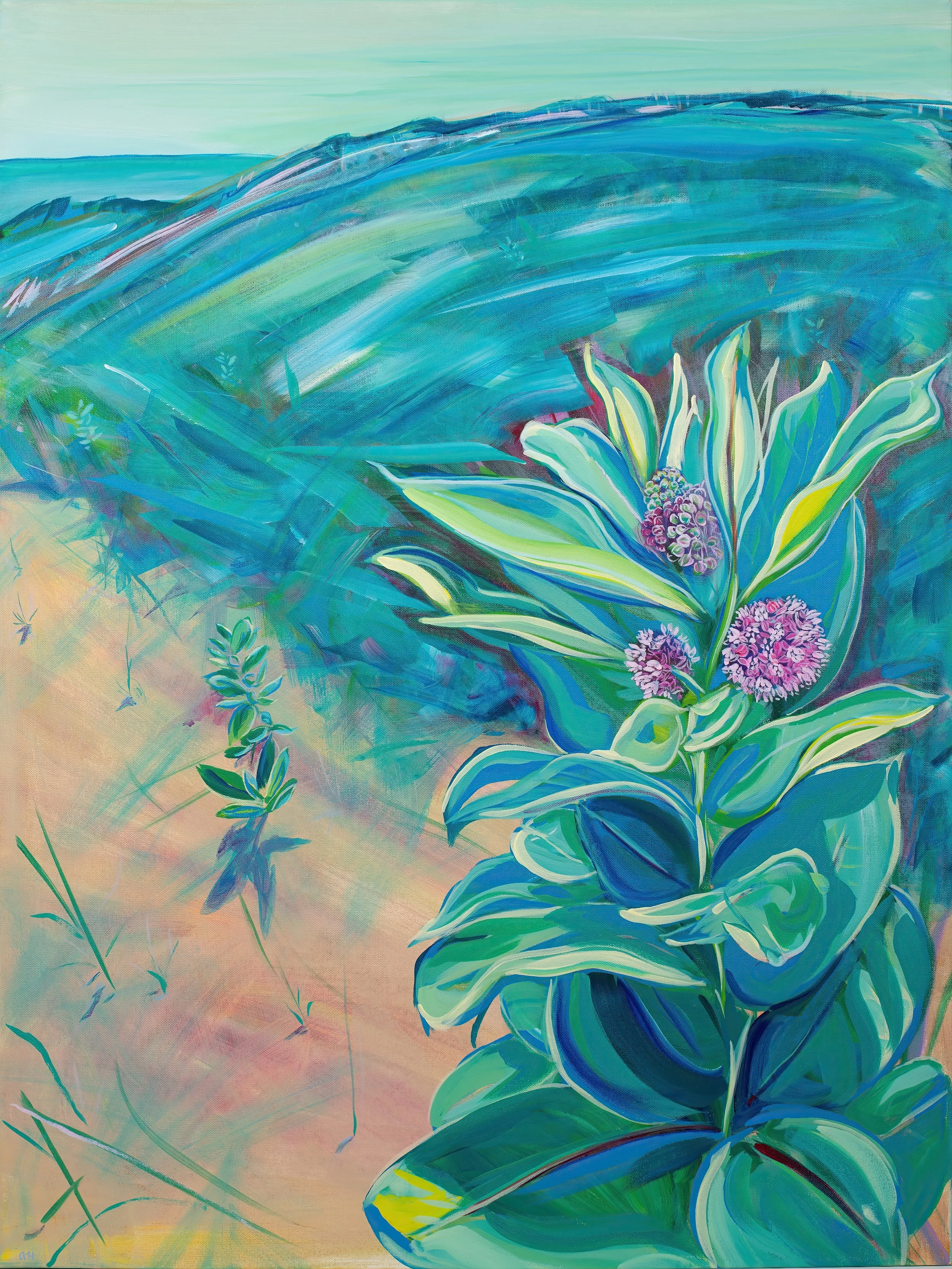
Common Milkweed at the Kohler Dunes
30”w x 40” h
Milkweed stands patiently, gripping the sand, feeling the sun, ready for an insect who needs it. It will be there to help start a new generation of monarchs and for their nectaring as they fly to Mexico. It is patient, strong, unfussy. Its perseverance and flexibility bring hope.
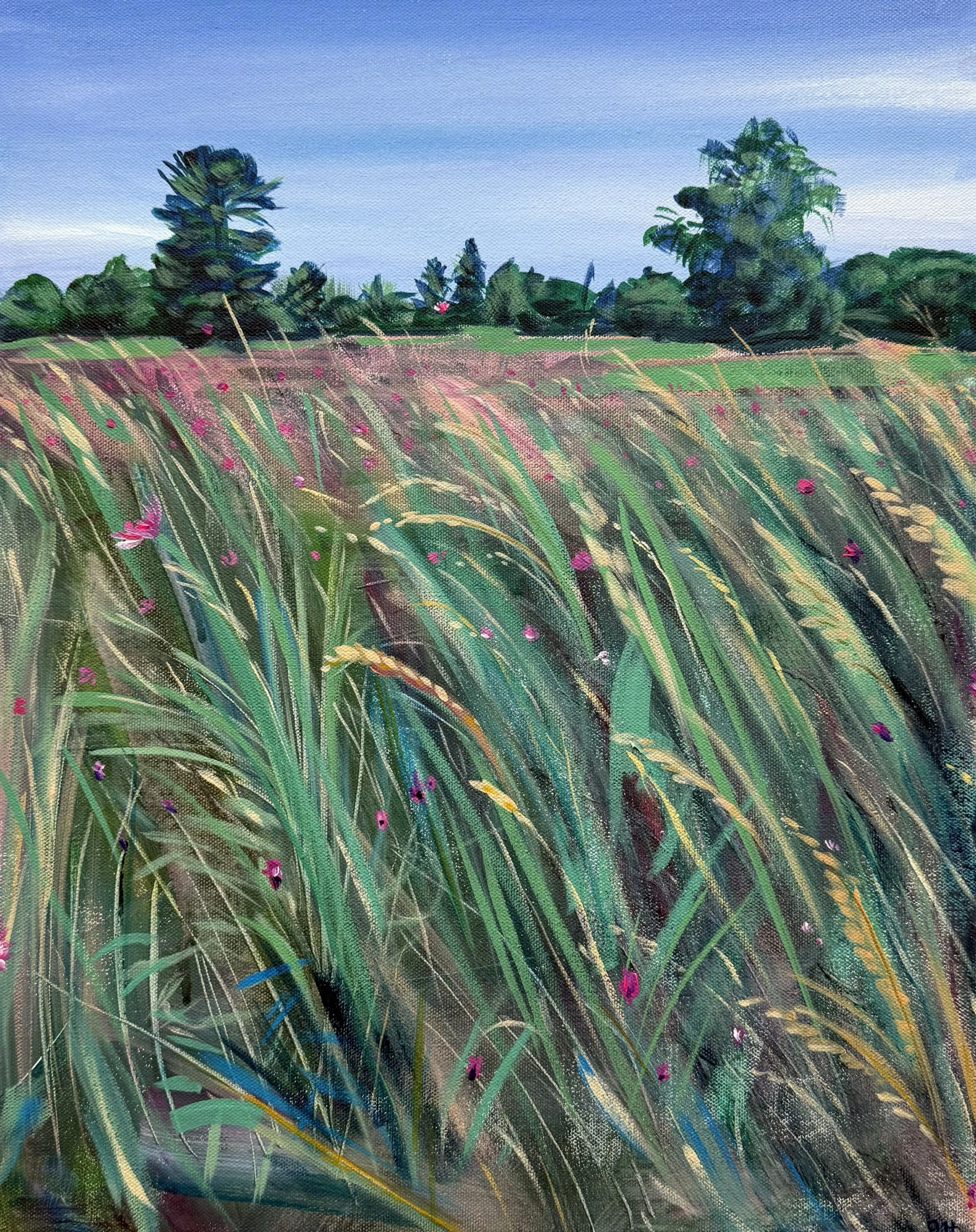
We See What We Want to See
16”w x 20”h
It’s not hopeless, because the sands are not lost, because the land hasn’t been developed. But these beautiful plants I’d thought were part of a specialized dunes ecosystem are actually highly invasive spotted knapweed and smooth brome. Stewardship of dunes is essential to give native plants a chance to grow—allowing native insects and ground-nesting birds and other wildlife a chance to survive and for water to be retained more readily.
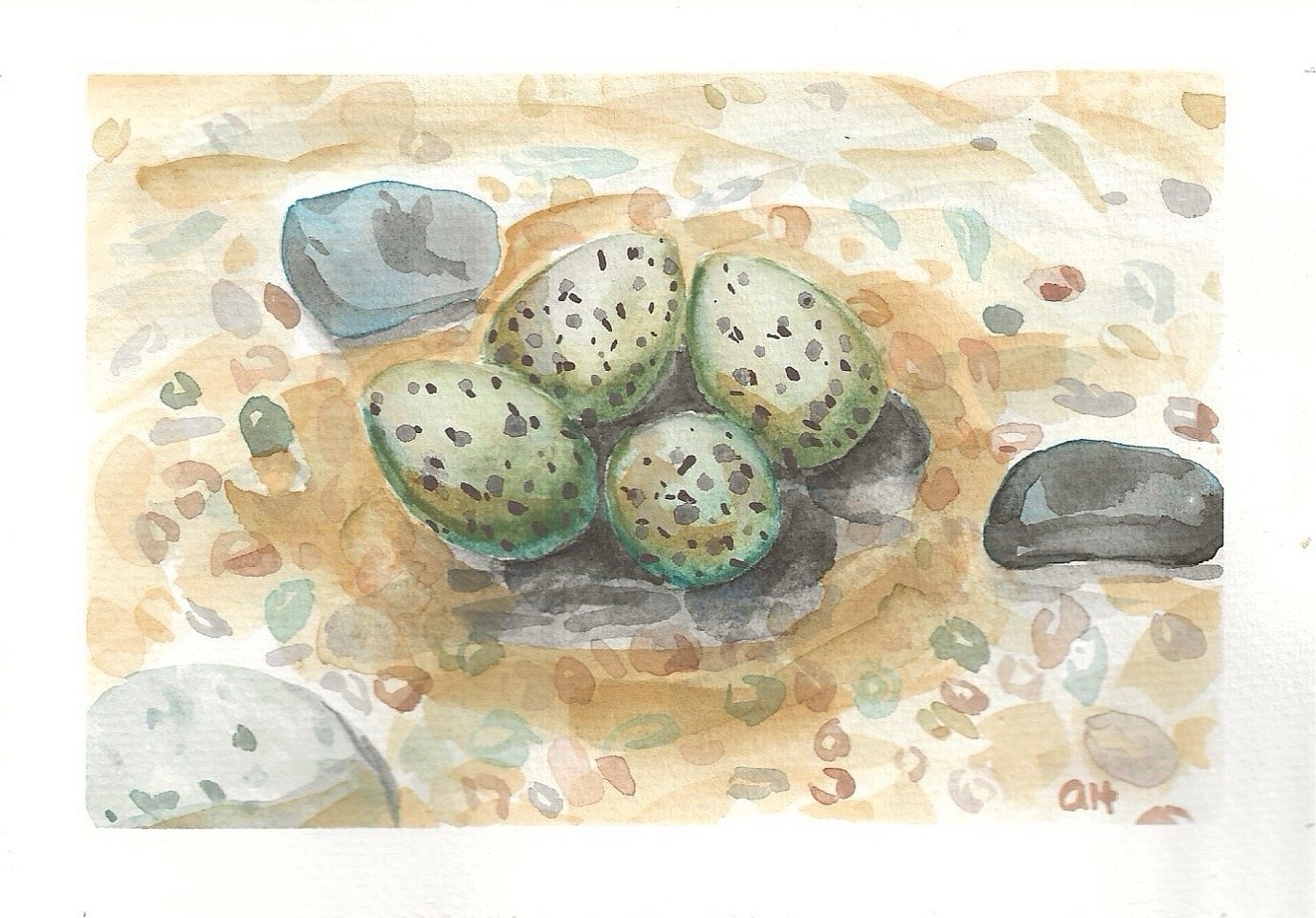
Elements of a Piping Plover Nest
8”w x 5” h
On sandy shores, the male piping plover digs out shallow depressions in the sand, called scrapes, above the high tide line, about 4” wide. After about a week, they pick one as a nest where she lay their 4 cream-colored, speckled eggs, each 32-36 mm long (at scale in this painting). They decorate the nest with shells and rocks and hide in plain sight thanks to this camouflage on an open shore.